


Quality and testing
How we test and document our products
Every Ecodrop oil is tested, and we would rather show you than ask you to trust us. Here is what each test and document means, and where to find them.
What a GC/MS profile looks like
Example: typical profile of our bergamot FCF essential oilFrom plant to bottle
Five steps, each one checked
Quality is not one test at the end. It is a habit that runs through how we source, make and document every oil.

Sourcing
We work with growers and producers we trust, and every product page names the species, origin and plant part.

Extraction
Steam distilled or cold pressed, so the oil keeps the character of the plant.

Testing
GC/MS analysis shows what is in the oil, so we can check it matches the plant it should come from.

Bottling
Filled and bottled in the UK, in amber glass that protects the oil from light.

Paperwork
Safety and analysis documents, kept for each product and shared on request.
Plain English
What GC/MS testing tells you
GC/MS stands for gas chromatography with mass spectrometry. It separates an essential oil into the individual compounds it contains and measures how much of each is there.
The result is a fingerprint. It is how we check that a lavender oil looks like lavender.

How to read a report
- Each row is one compound. The percentage is its share of the oil.
- The biggest compounds define the oil. In bergamot, limonene and linalyl acetate lead, as in the chart above.
- Totals may not reach exactly 100%. Very small compounds are often not listed.
- No two batches are identical. Season, harvest and soil all shift the numbers a little, and that is normal.
The paperwork
The documents behind each oil
Look for the Documents section on a product page. Four document types make up a full set.
Technical data sheet and GC analysis
The oil's botanical name, origin and extraction method, with the compounds measured in it.
What is in the bottleIFRA conformity certificate
The highest recommended level of the oil in different kinds of product, set by the fragrance industry's safety standard.
How much is safe to useDeclaration of allergens
The naturally occurring fragrance allergens found in the oil, such as limonene and linalool, and their levels.
For sensitive skinSafety data sheet
Handling, storage, hazard classification and first aid, in the standard UK format.
Handling and storageBatches
Why two bottles can differ slightly
Natural oils change from harvest to harvest, so every report belongs to a specific batch. If you would like the report for the bottle in your hand, send us the batch number from the label.
Where a document is not shown on a product page yet, it is available on request. We are adding them product by product, and checking each one before it goes live.
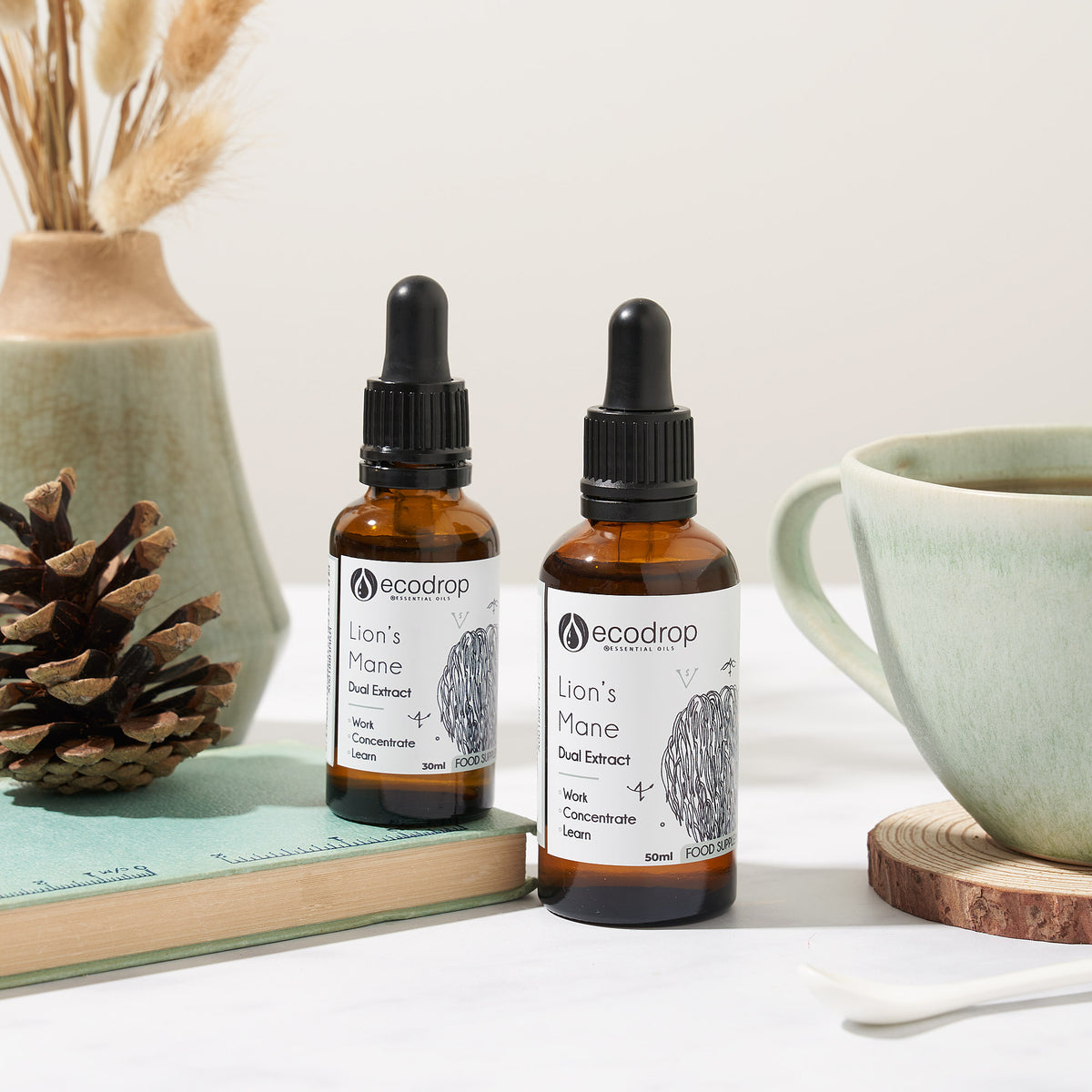
Mushroom tinctures
Lab reports available on request
Certificates of analysis for our mushroom tinctures are available on request. Email us with the product name and we will send them.
Good to know
Questions about testing
Buying and trusting an oil
How can I tell if an essential oil is genuinely pure?
A label is not proof. Pure means nothing has been added, such as a cheaper oil, a synthetic or a solvent, and the way to check that is a GC/MS analysis. It lists the compounds in the oil and in what proportions, so a pure oil should read like its plant: lavender should show linalool and linalyl acetate, tea tree should show terpinen-4-ol. Ask any seller for the report, and check that it names the same botanical and the same batch as the bottle.
Is "100% pure" the same as organic?
No. Pure is about what is in the bottle. Organic is about how the plant was grown. An oil can be one without the other, which is why we show them separately on each product page. Our GC/MS reports cover purity and composition. They do not replace the growing paperwork.
What does "therapeutic grade" mean?
Pure essential oils are also known as therapeutic grade. These are natural, pure oils with therapeutic value, but the term itself is mostly a marketing term, because no official body grades essential oils. That is why we point you to the GC/MS report, which shows what is in the bottle.
Why do two bottles of the same oil smell slightly different?
An essential oil is a natural product. The season, the harvest and the soil all change the balance of compounds a little from one batch to the next. A small difference in scent is normal, and the GC/MS report for that batch shows what changed.
Can I see the report for my oil?
Yes. Check the Documents section on the product page first. If a document is not shown, email support@ecodrop.co.uk with the product name and, if you have it, the batch number from the bottle, and we will send what we hold.
Reading the documents
What is the difference between a GC/MS report, a CoA and an SDS?
A GC/MS report lists the compounds in the oil. A CoA (certificate of analysis) is the batch certificate, usually with the main specifications and results. An SDS (safety data sheet) covers hazards, handling, storage and first aid. They answer different questions, so many products have more than one.
What does IFRA mean?
IFRA is the International Fragrance Association. Its standard sets the highest recommended level of an ingredient in different types of product, such as leave-on skin products, candles or room sprays. Our IFRA certificates show those levels for each oil.
What is a declarable allergen, and where do I find them?
Some natural compounds, for example linalool, limonene and geraniol, are recognised fragrance allergens. In cosmetics they must be listed by name once they pass a set level. The allergen figures for an oil come from its GC/MS results, and we send the allergen statement with the SDS where we hold it.
Is there a batch number on the bottle?
Yes. Quote it when you email us and we will match the report to that batch. Without one, we send the most recent report we hold for the product.
Using our oils in your own products
Can I use your oils in my own cosmetic or candle formulas?
Yes, and we are happy to help. Email support@ecodrop.co.uk with the oil, the product type and the maximum percentage you plan to use. We will send the SDS, the IFRA certificate and the GC/MS report where we hold them. You remain responsible for the safety assessment of your finished product.
Which dilution is safe for skin?
It depends on the oil, the product and the person. As a general guide, 1% suits face products and sensitive skin, and 2 to 3% suits body products. Some oils, such as cinnamon, clove and oregano, need much less. The IFRA certificate gives the maximum for each product type, and that limit comes before any general rule.
Which oils are phototoxic?
Cold-pressed citrus oils such as lemon, lime, bergamot and bitter orange can cause a reaction on skin that then meets sunlight. Sweet orange is not one of them. Bergamot FCF is processed to remove the compound responsible. The IFRA certificate gives the limit for leave-on products.
Can I get larger sizes or a different batch for production?
Many oils come in larger sizes, listed on the product page. For a particular batch, or a volume that is not shown, email support@ecodrop.co.uk and we will check what is available.
Are essential oils safe on skin?
Most can be used once diluted in a carrier oil and patch tested, but not all of them, and not for everyone. Each product page gives guidance for that oil. Check with a professional first if you are pregnant, have a medical condition or are using oils around children or pets.
Cannot see your question? Email support@ecodrop.co.uk and we will answer it.
Need a document we have not shown yet?
Tell us the product and we will send what we hold for it. Our team answers personally.
Essential oils are concentrated. Dilute before applying to skin, patch test, keep away from eyes, children and pets, and do not take oils internally. Check with a professional first if you are pregnant or have a medical condition.