


Myrrh Essential Oil: Uses, Benefits and How to Use It (UK Guide)
What myrrh essential oil is, what it smells like, how to use it in diffusers, skincare and perfume, how it differs from frankincense, and how to use it safely.
In this guide
Myrrh essential oil is a thick, amber oil steam-distilled from the resin of the Commiphora myrrha tree. It smells deep, smoky and resinous, and it is used in diffusers, in blends with frankincense, in rich facial oils for dry and mature skin, and as a base note in natural perfume. This guide explains what myrrh is, how to use it and how to use it safely.
Key takeaways
- Myrrh oil comes from the resin of Commiphora myrrha trees. Ours is steam-distilled, 100% pure and from Kenya.
- It smells warm, smoky and slightly sweet. It is a base note, so it anchors lighter oils and helps a blend last longer.
- The classic pairing is frankincense and myrrh: 3 drops of frankincense to 2 drops of myrrh in a diffuser.
- On skin, always dilute. About 3 to 6 drops in 30ml of carrier oil gives 0.5 to 1%.
- Avoid it in pregnancy, never swallow the essential oil, and patch test first.
What is myrrh essential oil?
Myrrh is the dried sap of Commiphora myrrha, a thorny tree that grows in the dry regions of the Horn of Africa and Arabia. The resin has been burned as incense, worked into perfume and used in traditional remedies for thousands of years, and it is famous as one of the gifts of the Magi.
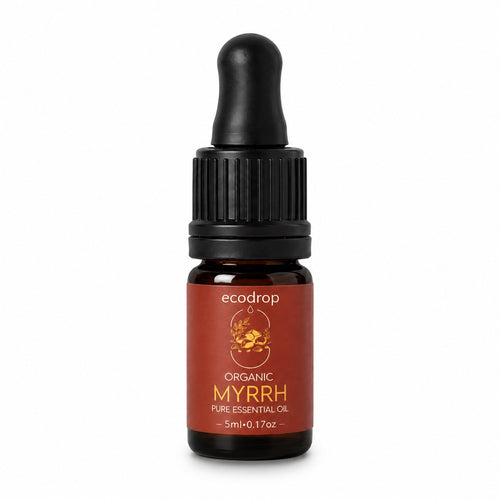
Myrrh essential oil is made by steam-distilling that resin. Our Organic Myrrh Essential Oil is a single botanical, Commiphora myrrha from Kenya, with nothing added or diluted. It is bottled in the UK and GC/MS tested, so you can check what is in the bottle.
What does myrrh smell like?
Myrrh smells deep, earthy, resinous and smoky, with a warm hint of sweetness and a whisper of liquorice. It is darker and smokier than frankincense. In perfumery it is a base note: slow to evaporate, it holds lighter oils in place, which is why natural perfumers use it as a fixative under rose, orange or frankincense.
How to use myrrh essential oil
| Use | How | Amount |
|---|---|---|
| Diffuser | On its own, or with frankincense for the classic resin pairing | 2 to 3 drops |
| Facial oil for dry and mature skin | Mixed into a rich carrier oil such as rosehip or jojoba | About 3 to 6 drops in 30ml |
| Hand or foot balm | Melted into an unscented balm | 1 to 2 drops |
| Meditation blend | Frankincense and myrrh in a diffuser, lights low | 3 drops frankincense to 2 drops myrrh |
| Natural perfume | As the deep base under rose, sweet orange or frankincense | A drop at a time |
Myrrh is rich and slightly sticky, so a little goes a long way. If the oil thickens in a cool room, warm the bottle between your hands before use.
Myrrh vs frankincense
Both are resins, both travelled the same ancient incense routes and they are almost always sold and blended together. They are different trees with different personalities.
| Myrrh | Frankincense | |
|---|---|---|
| Tree | Commiphora myrrha | Boswellia species |
| Smell | Dark, smoky, sweet and resinous | Brighter, fresh and lifting |
| Role in a blend | Deep base note | Bright, lifting top of the blend |
| Classic partner | Frankincense, sandalwood, patchouli | Myrrh, lavender, orange |
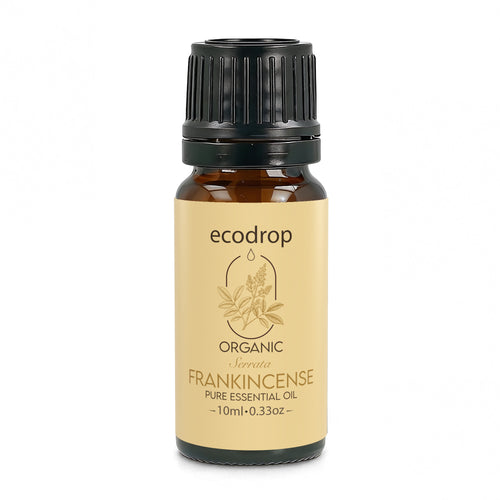
To compare the frankincense side, see our Organic Frankincense Serrata Essential Oil.
Myrrh in skincare
Myrrh oil is a long-standing favourite in facial and body oils for dry, weathered and mature skin, and in balms for hard-working hands. Dilute to 0.5 to 1% on the face and patch test first. For a worked example, our frankincense and myrrh face cream recipe shows how the pair works together, and our foot soak recipe uses it for tired feet.
Myrrh and oral care: traditional use
Myrrh has a long traditional use in mouthwashes and gum care, and myrrh tincture is still found in natural oral-care products. The essential oil is far more concentrated and must never be swallowed. Our DIY natural mouthwash with myrrh essential oil explains how to make a rinse that is swished and spat out. This is traditional use, not medical advice.
What blends well with myrrh?
- For depth: frankincense, sandalwood, cedarwood, vetiver and patchouli.
- To lift it: sweet orange and bergamot.
- To soften it: lavender, rose and geranium.
How to choose a good myrrh oil
- Look for the botanical name Commiphora myrrha on the label.
- Choose a single-botanical, 100% pure oil with nothing added. Avoid anything labelled myrrh fragrance oil.
- Ask for batch testing. A GC/MS report shows what is in the bottle.
- Know the difference: myrrh essential oil is steam-distilled, while an absolute, resinoid or tincture is made by solvent or alcohol extraction and behaves differently.
How to use myrrh oil safely
Safety notes
- Dilute before it touches skin. Never apply it neat.
- Patch test for 24 hours before first use.
- Myrrh is traditionally avoided throughout pregnancy. Ask a qualified professional first, and the same applies while breastfeeding.
- Never swallow the essential oil. Keep it away from children and pets.
- Store it cool and dark with the cap tightly closed.
FAQs
What is myrrh essential oil?
It is the essential oil steam-distilled from the resin of the Commiphora myrrha tree. It is thick, amber and smoky-sweet, and is used in diffusers, skincare blends and natural perfume.
What is myrrh used for?
Myrrh oil is used in diffuser blends with frankincense, in facial oils and balms for dry and mature skin, as a base note in natural perfume and in meditation blends. It also has a long traditional use in oral-care preparations.
Is myrrh the same as frankincense?
No. They are resins from different trees, Commiphora for myrrh and Boswellia for frankincense. Myrrh is darker, smokier and sweeter, while frankincense is brighter and lifting. They are usually blended together.
Is myrrh oil safe on the skin?
Yes when diluted. Use 0.5 to 1% on the face, about 3 to 6 drops in 30ml of carrier oil, and patch test first.
Can you use myrrh oil in pregnancy?
Myrrh is traditionally avoided throughout pregnancy, so please speak to a qualified professional before using it.
Where can I buy myrrh essential oil in the UK?
Our Organic Myrrh Essential Oil is available at ecodrop.co.uk from 5ml up to 1 litre, with UK delivery and free delivery on orders over £40.
The bottom line
Myrrh is a deep, resinous base oil that pairs beautifully with frankincense, enriches dry-skin oils and gives natural perfume its staying power. Choose a pure, batch-tested single botanical, dilute it well and use it a drop at a time.
Shop the oils from this guide: Organic Myrrh Essential Oil, Organic Frankincense Serrata Essential Oil and Organic Sandalwood Essential Oil, or browse our full range of essential oils.