


Thinking of Buying Organic Essential Oils? Here’s What You Need to Know
Thinking of buying organic essential oils in the UK? What organic means, how to tell a pure oil, and what to look for before you buy.
In this guide
Organic essential oils are made from plants grown without synthetic pesticides, herbicides or fertilisers, then distilled or cold pressed into a pure, concentrated oil. If you are thinking of buying organic essential oils in the UK, the best ones tell you exactly what is in the bottle: the botanical name, the country of origin, the extraction method and a GC/MS report. This guide explains what organic really means, how it differs from "pure", and how to choose oils that are safe, effective and ethically sourced.
Key takeaways
- Organic oils come from plants grown without synthetic chemicals, and they are traceable from the farm to the bottle.
- "Pure" means nothing has been added. "Organic" is about how the plant was grown. The best oils are both.
- A trustworthy label shows the botanical name, country of origin, plant part and extraction method, with GC/MS testing behind it.
- Good first oils are lavender, tea tree, peppermint, frankincense, eucalyptus and sweet orange.
- Always dilute before skin use, patch test first and store oils in dark glass away from heat and light.
Why are more people buying organic essential oils?
Interest in organic essential oils is growing fast, both in the UK and around the world. More people want natural, chemical-free products for skincare, wellbeing and the home, so organic oils have moved from niche to mainstream.
But words like "pure", "natural" and "therapeutic" are used freely in marketing. This guide clears things up, so you can recognise true 100% organic essential oils and choose products that are safe, effective and ethically sourced.
What are essential oils?
Essential oils are concentrated plant extracts. They capture the natural scent, flavour and therapeutic properties of the plant they come from. They are not called "essential" because you need them to survive, but because they hold the plant's "essence".
Oils are taken from flowers, leaves, roots, peels, wood and resin. Lavender and eucalyptus are steam distilled, citrus oils are usually cold pressed from the peel, and some plants need other specialised methods.
Essential oils are widely used for:
- Skincare and personal care
- Aromatherapy and stress relief
- Natural home cleaning
- Massage and physical therapy
They are potent, so a little goes a long way.
What does organic mean for essential oils?
Organic essential oils are made from plants grown without synthetic pesticides, herbicides or fertilisers. They are then extracted by methods such as steam distillation or cold pressing, to strict organic standards.
This means the plant is grown and processed free from harmful chemicals. It also means the oil is traceable, from the farm it came from to the bottle in your hand.
Many oils are described as "pure" or "natural". Without supporting evidence, such as GC/MS lab reports and clear sourcing details, there is no guarantee they meet those standards.
Pure vs organic essential oils: what is the difference?
These two words are often mixed up, but they mean different things. Pure essential oils are undiluted and free from additives, but they are not always organic. Organic essential oils come from plants grown under organic conditions, free from synthetic chemicals and traceable from field to bottle.
The word "pure" on a label is not regulated. Some oils contain fillers, or have been mixed with carrier oils without saying so. That is why the best choice is an oil that is both 100% pure and organic, with test results to prove it.
| Term | What it means | What to look for |
|---|---|---|
| Pure | Nothing added, no carrier oil or filler | A GC/MS report for the batch |
| Organic | Plant grown without synthetic pesticides or fertilisers | Clear organic sourcing details |
| Natural | Comes from a plant, not made in a lab | The botanical (Latin) name |
Organic vs non-organic essential oils
Farming practices
The difference starts with how the plants are grown. Organic oils come from crops raised without chemical sprays or synthetic fertilisers. The soil is protected, wildlife is encouraged and harvests are often more sustainable.
Conventional oils may come from plants grown with chemical inputs. Distillation can remove some residues, but not every method is foolproof, especially for citrus oils made by cold pressing the peel.
Labelling and trust
Trustworthy organic oils come with clear labelling. Look for the botanical name, the country of origin and the method of extraction on every bottle.
Safety and sensitivity
If you put oils on your skin or use them in a diffuser at home, traces of pesticides or synthetic solvents are a fair concern. Organic oils reduce this risk a great deal. This matters most for children, pregnant women and anyone with sensitive skin.
Environmental impact
Choosing organic oils also supports the planet. It helps protect ecosystems and reduces pollution from industrial farming, which is why many people see organic as the more ethical and eco-friendly choice.
How to choose the best organic essential oils in the UK
When you buy organic essential oils in the UK, judge the brand by how much it tells you. A good supplier is open about every oil it sells.
- Botanical name: the Latin plant name, so you know the exact plant and variety.
- Country of origin: where the plant was grown.
- Plant part and method: leaf, flower, peel or resin, and whether it was steam distilled or cold pressed.
- GC/MS report: a lab test that shows what is inside the oil and that nothing has been added.
- Dark glass bottle: amber or cobalt blue glass protects the oil from light.
- Safety information: clear dilution advice and a safety data sheet on request.
At Ecodrop we share lab reports and full sourcing details for each oil, so you can judge the quality yourself. You can browse every oil in our organic essential oils collection.
Pro tip
If a brand cannot tell you the botanical name and country of origin of an oil, be cautious about its organic and purity claims. Real transparency is the best sign of quality.
The best organic essential oils for skin and everyday use
Not every essential oil suits the skin, but many organic oils are well tolerated and very helpful when used correctly. Here are five favourites.
| Oil | Known for | Best for |
|---|---|---|
| Lavender | Soothing skin and the nervous system, supports healing and better sleep | Mild irritation, evening routines |
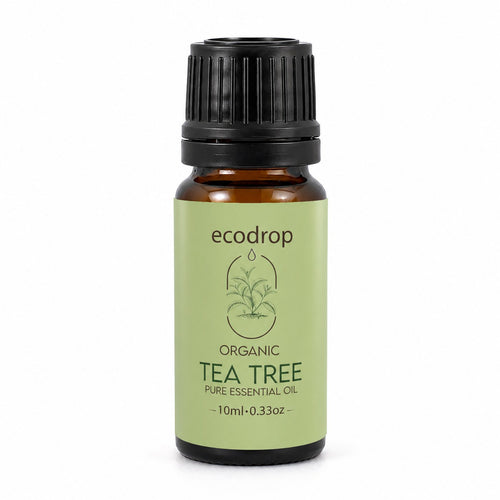
| Tea tree | Antibacterial and antifungal properties | Blemishes, minor cuts, dandruff |
| Frankincense | Regenerative properties, may reduce the look of fine lines and scars | Mature or dry skin |
| Geranium | Balances oil production, pleasant floral scent | Oily and combination skin |
| Chamomile | Gentle and calming | Red, inflamed or sensitive skin |
Lavender is often used in moisturisers and night-time routines. Tea tree must always be diluted before it goes on the skin. Chamomile is often mixed into creams or oils for conditions like eczema and rosacea.
For more ideas, read our guide to the benefits of organic essential oils for skin.
Beyond skin: other everyday uses
- Add a few drops to a diffuser for a relaxing atmosphere.
- Use lemon or eucalyptus in natural cleaning sprays.
- Mix peppermint or rosemary into a carrier oil for a refreshing massage blend.
How to use organic essential oils safely
Even though they are natural, essential oils are powerful and concentrated. Used the wrong way, they can irritate the skin or the airways. Safe use starts with dilution.
Diluting with carrier oils
Before applying oils to the skin, mix them with a carrier oil such as jojoba, sweet almond or coconut (solid or fractionated). Our guide on how to choose your carrier oil can help.
| Use | Dilution | Drops per 10ml carrier |
|---|---|---|
| Face | 0.5% to 1% | 1 to 2 drops |
| General body use | 2% | About 4 drops |
| Targeted, short-term use | Up to 5% | About 10 drops |
Patch testing
Even diluted oils can cause reactions in sensitive people. Apply a small amount to your inner arm and wait 24 hours before using it more widely.
Diffuser use
Add 3 to 5 drops of oil to a water-based diffuser. Use it in a well-aired room, and do not run it nonstop for long periods.
Safety first
Avoid contact with the eyes and inside the nose or mouth. Some oils are unsuitable during pregnancy or for people with health conditions. Never swallow essential oils unless a qualified practitioner tells you to.
Used correctly, organic essential oils are a gentle and effective part of a natural wellness routine.
How to store essential oils and make them last
Essential oils are volatile, which means they can break down when exposed to air, heat or light. Good storage keeps them potent and safe to use.
- Keep bottles tightly sealed.
- Store them in amber or cobalt blue glass.
- Keep them away from heat and direct sunlight.
- Use the original bottles, as plastic can react with the oil.
| Oil type | Shelf life |
|---|---|
| Citrus oils | Up to 1 year |
| Most oils (such as lavender) | 2 to 3 years |
| Resinous oils | Up to 6 years |
If an oil smells sour, feels sticky or looks cloudy, it may have oxidised and should be replaced. Label opened bottles with the date, and keep them in a cool, dark drawer or an essential oil box.
FAQs
Is it worth getting organic essential oils?
Yes, especially if you use them on your skin, in a diffuser or for your wellbeing. They are made without synthetic pesticides or fertilisers, so they are cleaner and safer for sensitive users. They may cost a little more, but the added purity and environmental benefits often make them worth it.
What is the difference between pure and organic essential oils?
Pure essential oils are undiluted and free from additives, but they are not always organic. Organic oils come from plants grown without synthetic chemicals and are traceable from field to bottle, so they give more assurance of quality and sustainability.
Are organic essential oils better than non-organic?
For most people, yes. Organic oils lower the risk of pesticide or solvent traces, which matters most on the skin and around children. They also support farming that protects the soil and wildlife.
How do I know if an essential oil is organic?
Look for full transparency from the supplier. The label should show the botanical name, country of origin and extraction method, ideally with batch testing details. If this information is missing, be cautious about organic claims.
Who makes the best organic essential oils in the UK?
Look for brands that publish GC/MS purity reports and share the botanical name, country of origin and extraction method for every oil. At Ecodrop we share lab reports and full sourcing details for each oil, so you can judge the quality yourself. Choose on transparency, sourcing and how you plan to use the oil.
What are the best organic essential oils to buy in the UK?
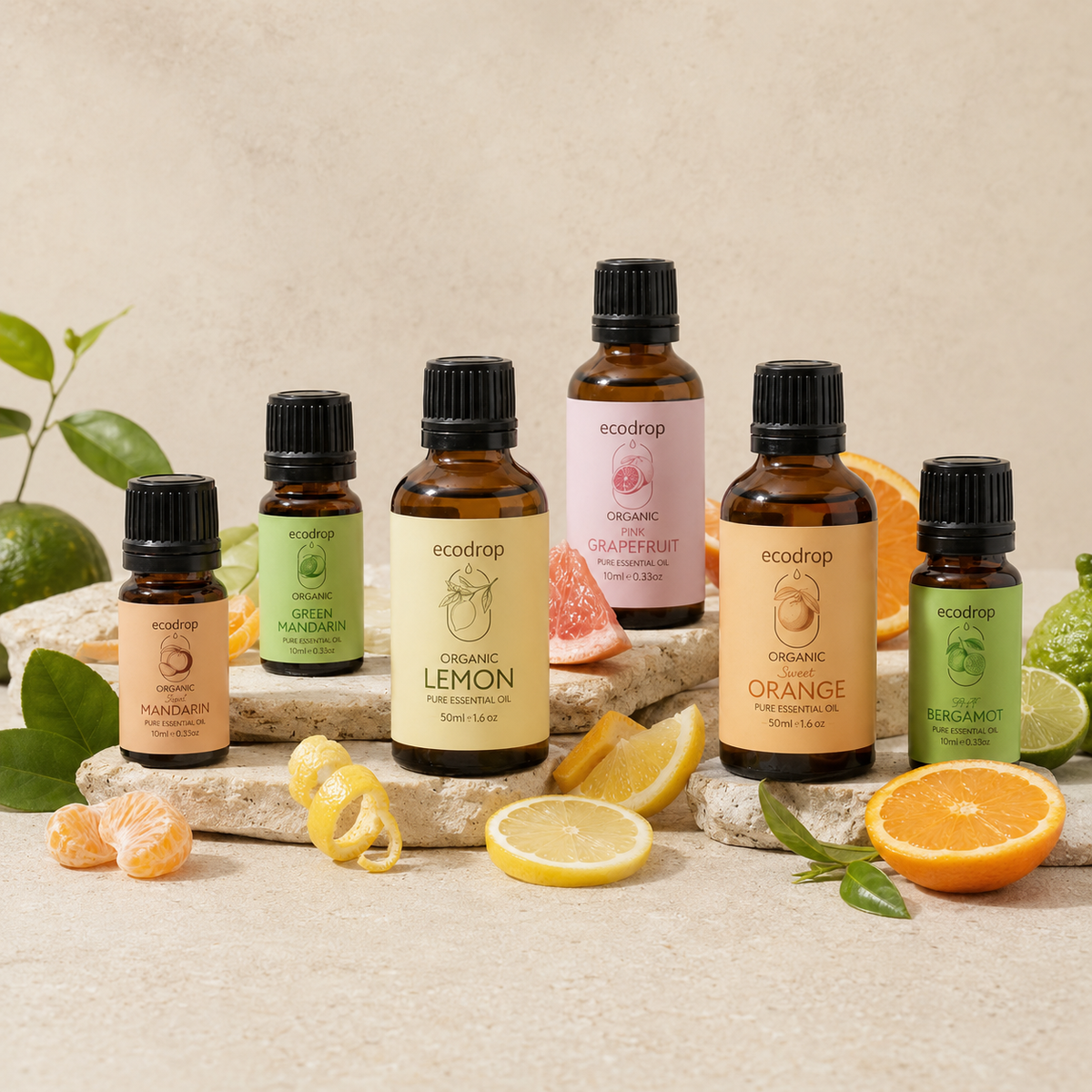
The best ones tell you exactly what is in the bottle. Good starting oils are lavender, tea tree, peppermint, frankincense, eucalyptus and sweet orange, as they cover relaxation, cleaning, skincare and diffusing. Our organic essential oil set of 6 is an easy way to start.
Are all essential oils natural?
No. Some products sold as "essential oils" are blended with synthetic fragrance or carrier oils. A real essential oil comes only from the plant, and a GC/MS report is the best way to check.
Are organic essential oils safe?
Yes, when used correctly. Dilute them before skin use, patch test first, use a diffuser in a well-aired room and take extra care with children, pregnancy and health conditions.
The bottom line
Organic essential oils offer a cleaner, safer and more sustainable way to support your health and wellbeing. Choose oils from transparent, organic sources, dilute them well and store them carefully, and they will become a reliable part of your daily routine. Explore our organic essential oils collection, or read how effective organic essential oils are in aromatherapy and nature's best 6 organic essential oils.